Alabastrino Travertine
- Home
- portfolio
- Travertine
- Alabastrino Travertine
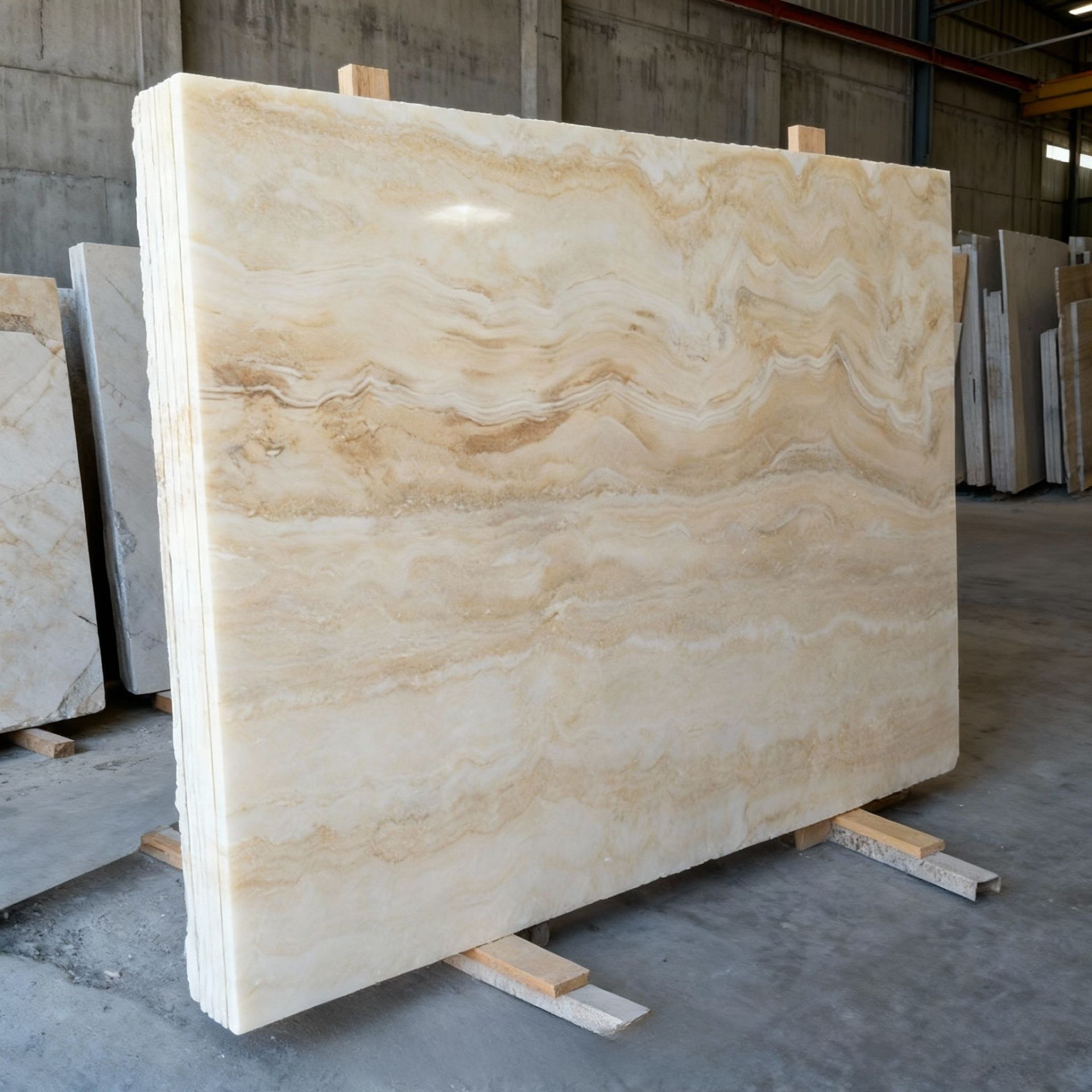
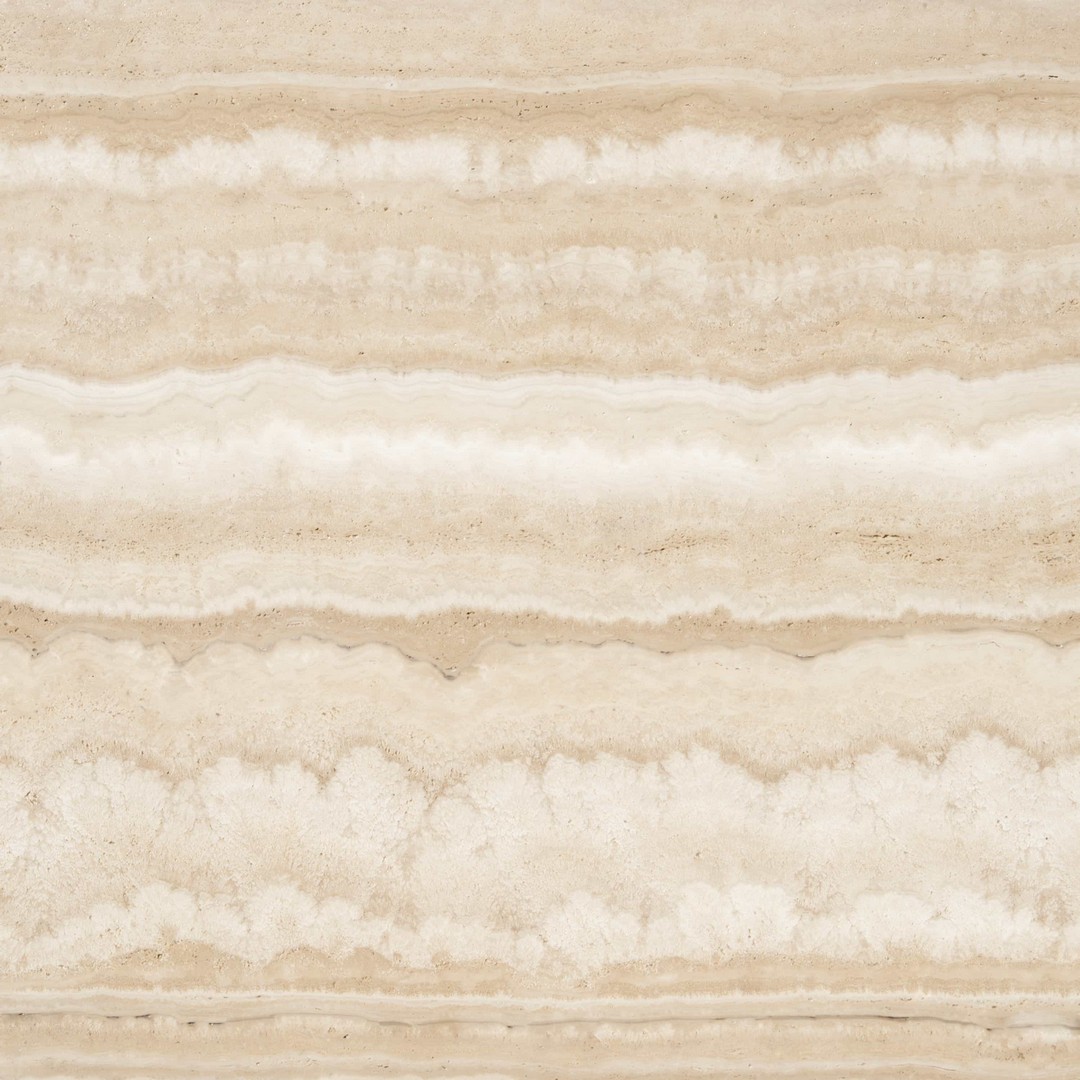
Alabastrino Travertine is a compact, fine-grained Roman travertine prized for its ivory–cream base and elegant yellow-to-Havana veining. Quarried in the Tivoli–Guidonia basin near Rome, it offers higher uniformity and fewer voids than typical travertines—making it suitable for refined interiors and demanding architectural façades.
Design in details → what “Alabastrino” means
The Alabastrino designation refers to a particularly compact, uniform variety of travertine formed by thermal-spring precipitation in low-energy waters east of Rome. Compared to standard Romano Classico or Noce, Alabastrino shows tighter structure, less open porosity, and calmer veining, which translates into smoother finishing and excellent pattern continuity.
Travertine is a porous carbonate stone: for most use-cases a penetrating impregnating sealer is recommended to reduce absorption and to simplify routine care. Re-sealing cadence depends on finish and exposure (shorter intervals for kitchens, baths, and high-traffic floors).
For performance selection, travertine dimension stone is specified under ASTM C1527, with common laboratory tests including ASTM C97 (absorption), ASTM C170 (compressive strength), and ASTM C880 (flexural strength). Always request certified test reports for the supplied lot.
COMMON MODULES
PRIMARY USE
SLABS / PAVERS
FINISHES
Design in Details
In design, we bring characteristics of the natural world into built spaces, such as water, greenery, and natural light, or elements like wood and stone. Encouraging the use of natural systems and processes in design allows for exposure to nature, and in turn, these design approaches improve health and wellbeing. There are a number of possible benefits, including reduced heart rate variability and pulse rates, decreased blood pressure, and increased activity in our nervous systems, to name a few.
Over time, our connections to the natural world diverged in parallel with technological developments. Advances in the 19th and 20th centuries fundamentally changed how people interact with nature. Sheltered from the elements, we spent more and more time indoors. Today, the majority of people spend almost 80-90% of their time indoors, moving between their homes and workplaces. As interior designers embrace biophilia.
Incredible Result
Establishing multi-sensory experiences, we can design interiors that resonate across ages and demographics. These rooms and spaces connects us to nature as a proven way to inspire us, boost our productivity, and create greater well-being. Beyond these benefits, by reducing stress and enhancing creativity, we can also expedite healing. In our increasingly urbanized cities, biophilia advocates a more humanistic approach to design. The result is biophilic interiors that celebrate how we live, work and learn with nature. The term translates to ‘the love of living things’ in ancient Greek (philia = the love of / inclination towards), and was used by German-born American psychoanalyst Erich Fromm in The Anatomy of Human Destru ctiveness (1973).